Your Grandmother's Photo Box Might Hold the Family History No Record Ever Could
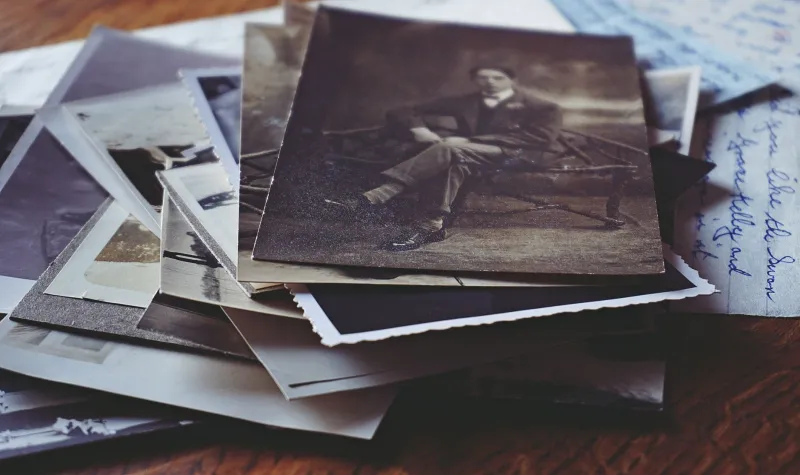
There's a photograph sitting in a lot of American homes right now. Maybe it's tucked inside an old cigar box, or sandwiched between the pages of a Bible nobody reads anymore. It shows someone — a woman in a high-collared dress, a man with a serious expression, a group of children squinting into summer sun — and absolutely nobody living can tell you who they are.
For generations, those mystery faces just... stayed mysterious. But something has quietly shifted. Everyday people are picking up those forgotten portraits, scanning them, and feeding them into reverse image search tools and AI-powered visual platforms. And sometimes — not always, but enough to matter — they're getting answers.
Why Official Records Only Tell Part of the Story
Genealogy has always had a documentation problem. Census records skip people. Church logs get destroyed in fires. Enslaved ancestors were often recorded only as property, stripped of surnames entirely. Immigrant families anglicized their names at the border. For huge swaths of American families — Black families, Indigenous families, immigrant families from Southern and Eastern Europe, families that moved frequently or lived in rural poverty — the paper trail goes cold fast.
Photographs, though, survived in ways that documents didn't. They got passed down through daughters and nieces and family friends. They ended up in estate sales and antique shops. They traveled. And because images carry visual information that text simply can't — the shape of a jaw, the style of a collar, the backdrop of a particular photography studio — they sometimes hold clues that no birth certificate ever would.
That's where visual search technology is quietly becoming something genuinely useful.
What Reverse Image Search Actually Does for Family Research
At its most basic, reverse image search lets you upload a photo and find visually similar images across the web. For genealogy purposes, that opens up a few different doors.
The most straightforward use is identifying the photograph itself. Old portrait studios often used distinctive backdrops, furniture, and props that can be matched to specific locations and time periods. Searching a scanned photo can surface similar studio shots, helping researchers narrow down where and roughly when a picture was taken — which can then point toward the right county records or immigration manifests to dig through.
Some researchers have had luck finding the same person in multiple photographs — a face appearing in a digitized newspaper archive, a church directory scan someone uploaded to a genealogy forum, or a historical society's online collection. Visual similarity tools aren't doing facial recognition in the surveillance sense, but they can flag images that share enough visual characteristics to be worth a closer look.
AI-enhanced tools are adding another layer. Platforms that use machine learning to analyze image metadata, estimate photo dates based on clothing and photographic technique, or identify regional visual patterns are giving hobbyist researchers a kind of expertise they didn't have access to before.
The Communities Doing This Work
This isn't happening in isolation. There's a whole informal ecosystem of people sharing techniques, pooling knowledge, and sometimes crowdsourcing identifications.
Facebook groups dedicated to antique photograph identification have hundreds of thousands of members. Reddit communities focused on genealogy regularly see posts where someone uploads a mystery portrait and gets useful information back within hours — not from AI, but from people who happen to know that a particular type of tintype was popular in a specific region during a specific decade, or who recognize a studio backdrop from their own research.
Genealogy platforms like Ancestry and MyHeritage have built their own AI photo tools directly into their products — features that can suggest potential relatives by comparing facial features across family trees, or colorize and restore old images to make details easier to examine. FamilySearch, the free platform run by the Church of Jesus Christ of Latter-day Saints, has been digitizing and indexing historical photographs at massive scale.
The image search piece connects all of this. When someone scans a photo and runs it through a visual search tool, they might land on a genealogy forum thread where someone else was researching the same family. Or they might find a digitized local newspaper that ran a photograph of the same person decades later. The web is enormous, and a lot of genealogical material has been uploaded to it — it's just scattered.
The Emotional Weight of Finding a Face
It would be easy to frame this purely as a technology story, but anyone who's actually done this kind of research will tell you it's not. There's something that happens when a face that was anonymous for fifty years suddenly has a name attached to it.
Families that were separated by migration, by war, by adoption, by the fracturing violence of American history — those separations left gaps that official records couldn't fill and that living memory eventually couldn't hold either. Finding a photograph and being able to say this was a real person, and here is something about who they were is not a small thing.
Researchers working on African American genealogy have talked specifically about how visual tools are helping recover histories that were systematically excluded from documentation. Photographs taken in Black communities — by Black photographers, for Black families — exist in archives and private collections and antique shops, often unidentified. Visual search is one way those images find their way back toward the families they belong to.
What the Technology Can't Do (Yet)
Honesty matters here. Reverse image search is a starting point, not a solution. It surfaces possibilities, not certainties. A visual match between two photographs doesn't confirm a family relationship — it's a lead that still needs to be chased through other sources.
Facial recognition raises real ethical questions in this context, too. The same technology that might help someone identify a great-great-grandmother in a photograph is also technology with a complicated history around consent, accuracy, and bias. Most serious genealogists treat AI-generated suggestions as hypotheses to investigate, not conclusions to accept.
And the historical record still has the gaps it always had. Technology can help you search more efficiently, but it can't create documentation that was never created.
Where to Start If You've Got a Box of Unknowns
If you're sitting on a collection of unidentified family photographs, the first step is getting them digitized at the highest resolution you can manage. Detail matters — a blurry scan is going to give you less to work with than a sharp one.
From there, Google Lens and TinEye are free starting points for visual search. Uploading to genealogy-specific platforms like MyHeritage's photo tools can connect you with their matching databases. And don't underestimate the power of posting to dedicated genealogy communities — human expertise still beats algorithmic search for a lot of this work.
The photograph in your grandmother's box has been waiting a long time. The tools to start asking questions about it are more accessible than they've ever been. That's not nothing.