Dusty Vaults and Digital Detectives: How Visual Search Is Exposing the Art World's Best-Kept Secrets
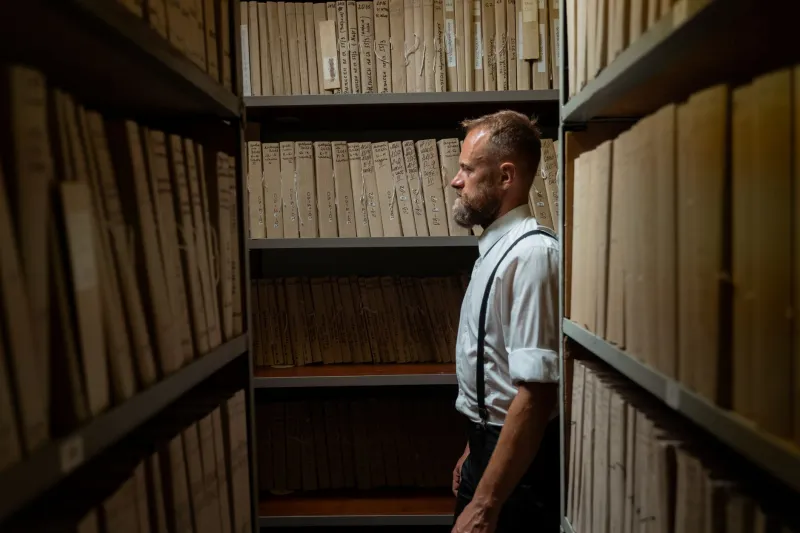
Somewhere in a climate-controlled storage room, behind a rack of canvases that haven't seen natural light in thirty years, there might be a Vermeer. Or a lost Rembrandt. Or a piece of Indigenous sculpture that was cataloged wrong in 1962 and never corrected. Nobody checked — until recently.
Thanks to visual search technology that's gotten remarkably good at matching brushstrokes, compositional patterns, and stylistic fingerprints, a growing community of researchers, historians, and flat-out obsessed art lovers are doing something museums probably should have done a long time ago: actually looking.
The Problem With "Attributed To"
Here's a phrase that should make any art lover's ears perk up: attributed to. Walk through any major American museum — the Met, the Art Institute of Chicago, the Philadelphia Museum of Art — and you'll find dozens of works labeled that way. It's the art world's equivalent of a shrug. "We think it might be connected to this artist's circle, but honestly, we're not sure."
For a long time, resolving that uncertainty required physical access to the work, expert travel budgets, and years of correspondence between specialists who often disagreed anyway. The process was slow, expensive, and gatekept by institutional prestige.
Image search didn't care about any of that.
When researchers started feeding high-resolution scans of "attributed to" works into AI-powered visual matching tools, the results were sometimes startling. Paintings dismissed as workshop copies came back with strong similarity scores to confirmed originals. Sculptures flagged as reproductions showed stylistic markers that matched specific regional traditions nobody had thought to connect them to.
The technology wasn't making definitive attributions — that still requires human expertise — but it was pointing fingers in directions nobody had looked before.
Real Finds, Real Stakes
This isn't purely theoretical. In the past several years, a handful of cases have made waves in the art world precisely because image-based analysis played a central role in the discovery.
One of the more dramatic examples involved a painting that had been sitting in a regional American museum's permanent collection for decades, cataloged as a minor Dutch Golden Age work of uncertain origin. A graduate student running visual comparisons through an image search platform noticed that the compositional layout — the angle of light, the placement of figures, specific drapery folds — matched closely with authenticated works by a considerably more significant painter. After further analysis by conservators and art historians, the attribution was revised upward in a way that significantly changed the work's estimated value and cultural importance.
Similar stories have emerged from university collections, private estates donated to institutions, and even church inventories. The common thread: works that nobody looked at closely because they were assumed to be unremarkable.
Who's Actually Doing This Work
What's fascinating about the image search revolution in art history is how democratic it's become. Yes, some of this work is happening inside major research institutions with serious funding. But a surprising amount is being driven by amateurs — collectors, hobbyists, and obsessive enthusiasts who have the time, the curiosity, and now the tools to do meaningful investigative work.
Online communities have formed around exactly this kind of visual sleuthing. People share high-res images of works they've encountered at smaller museums or estate sales, run them through reverse image search and AI visual matching tools, and crowdsource the analysis. Sometimes they hit dead ends. Sometimes they find something genuinely significant.
For a platform like ImgWebSearch, this represents one of the more compelling real-world use cases for visual discovery technology. The ability to search not just by keyword but by the actual visual content of an image — color relationships, compositional structure, textural detail — opens up research pathways that text-based search simply can't replicate. You can't Google "painting that looks like this other painting" and get useful results. But you can use image-based search to do exactly that, and increasingly, people are.
The Cataloging Crisis Nobody Talks About
Here's the uncomfortable institutional reality underlying all of this: most museums in the United States have cataloging backlogs that would make your head spin. The Smithsonian alone holds an estimated 155 million objects. The percentage of those items that have been digitized, properly described, and made searchable? Nowhere near 100%.
This isn't a criticism — it's a resource problem. Cataloging is painstaking, specialized work, and there's never been enough funding or personnel to do it comprehensively. The result is that significant portions of American cultural heritage are effectively invisible, even to the institutions that hold them.
Image search technology doesn't solve the underlying resource problem, but it does offer a different angle of attack. Rather than waiting for every object to be manually described and indexed, visual AI can scan large image databases and flag similarities, anomalies, and potential misattributions automatically. It's a way of triaging the backlog — surfacing the items most likely to warrant closer human attention.
Several institutions are already experimenting with this approach, partnering with tech companies and university research labs to run their digitized collections through visual analysis tools. The early results have been encouraging enough that more formal programs are being discussed at the policy level.
What Happens When the Algorithm Finds Something
Discovery is only the beginning, and this is where the art world's traditional structures reassert themselves. When image search flags a potential misattribution or surfaces a hidden connection between works, the next steps involve physical examination, provenance research, expert consultation, and often contentious debate among specialists who've built careers on particular interpretations.
That process can take years, and it doesn't always end in a satisfying resolution. Attribution questions in art history are genuinely hard, and the technology is surfacing new ones faster than the scholarly infrastructure can process them.
There's also a commercial dimension that complicates things. A work's attribution directly affects its monetary value, which means that discoveries can have significant financial implications for museums, estates, and collectors. That reality introduces incentives — on all sides — that aren't always aligned with straightforward truth-seeking.
The Bigger Picture
Stripped of the art-world drama, what's happening here is something genuinely exciting: visual search technology is democratizing access to cultural knowledge that was previously locked away by institutional barriers, geographic limitations, and the sheer scale of what needs to be examined.
A collector in Cincinnati can now run a meaningful visual analysis on a painting they found at an estate sale. A historian in Texas can compare stylistic elements across works held in a dozen different countries without leaving their desk. A curious person with no formal credentials can contribute to the collective project of understanding what humanity has made and where it came from.
That's not a small thing. The museum heist nobody noticed wasn't a theft — it was a slow accumulation of overlooked significance, hiding in plain sight behind bad labels and dusty storage racks. Image search is finally turning on the lights.